Solid Hardwood Flooring
Solid wood flooring combines strength, beauty, and environmental responsibility, making it a flooring choice that not only adds value to a home but enhances its character.

What is Solid Hardwood Flooring?
Solid hardwood flooring is made from a single piece of natural wood cut directly from a log. It is seen as a premium, long-lasting feature. It is also easy to clean and maintain compared to carpets or softer flooring types, making it a healthier option for indoor air quality since it does not trap dust, pollen, or allergens.

Why Is A Solid Wood Floor Right For Me?
Solid wood flooring can last for generations when properly cared for. One of its biggest advantages is longevity: unlike many flooring materials that need replacing after wear, solid hardwood can be sanded and refinished multiple times, restoring its original appearance and extending its life. Its natural wood grains and rich tones add warmth and elegance to any space, and because every plank is unique, the flooring creates a distinctive and authentic aesthetic.
Solid Wood Flooring FAQ
-
Oak (Red & White Oak) – Most popular; durable, affordable, and classic grain patterns.
Maple – Harder than oak, with a lighter, smooth, and uniform look.
Hickory – Very strong and dense, with dramatic grain variations.
Walnut – Rich, dark brown tones with elegant grain; slightly softer.
Cherry – Reddish hues that deepen over time; softer and more luxurious.
Birch – Light-colored, smooth wood with subtle grain.
-
In terms of sustainability, hardwood flooring is a renewable resource when sourced from responsibly managed forests. Many species used in flooring, such as oak and maple, are abundant and replenished through sustainable forestry practices. Unlike synthetic flooring materials, solid hardwood contains no plastics or harmful chemicals, and at the end of its long life, it can be recycled, repurposed, or biodegraded rather than ending up as landfill waste. Because of its long lifespan, it also reduces the environmental impact associated with frequent replacement.
We’re proud to work with some of the best suppliers of premium solid wood flooring in the UK, using sustainably sourced and FSC approved wood.
-
A “sand and seal” is the process of restoring solid wood flooring by sanding off its old finish and imperfections, then applying a fresh protective sealant. It’s often used when floors look worn, scratched, or dull, and it can make old hardwood look almost new again.
-
We’re experienced in fitting a range of patterns, from classic straight lay to the intricate basket weave. We can work with you to find the one that best compliments your home.
Straight Lay
This is the most common and simplest pattern, where planks are laid side by side in a straight line across the room, usually parallel to the longest wall. It creates a clean, uniform look that highlights the natural grain of the wood without distraction. Straight lay is timeless, versatile, and works in both traditional and modern interiors.Diagonal Lay
Similar to straight lay, but the planks are installed at a 45-degree angle to the walls. This subtle twist adds more visual interest, makes rooms appear larger, and can be a great way to emphasize architectural features.Herringbone
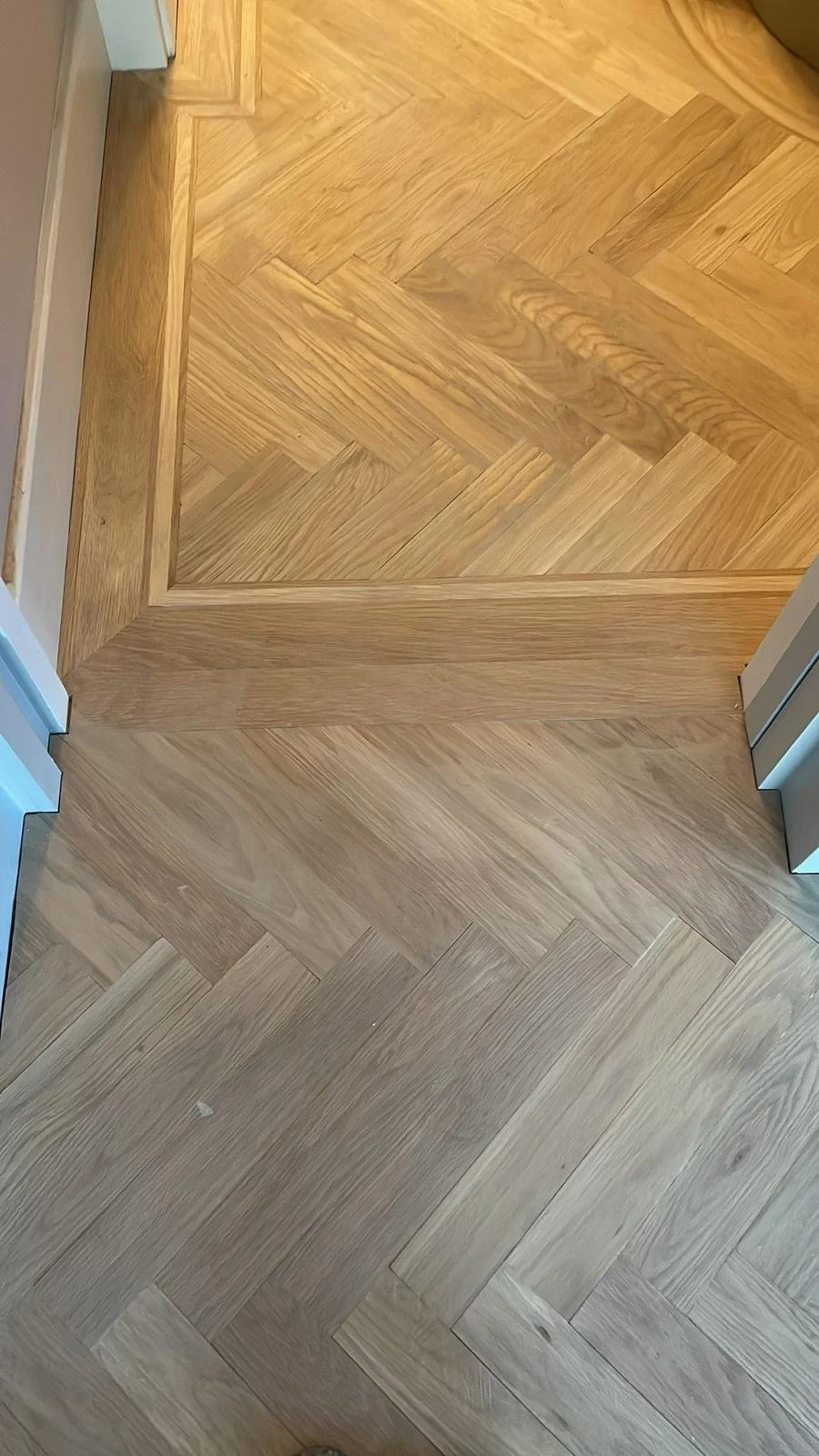
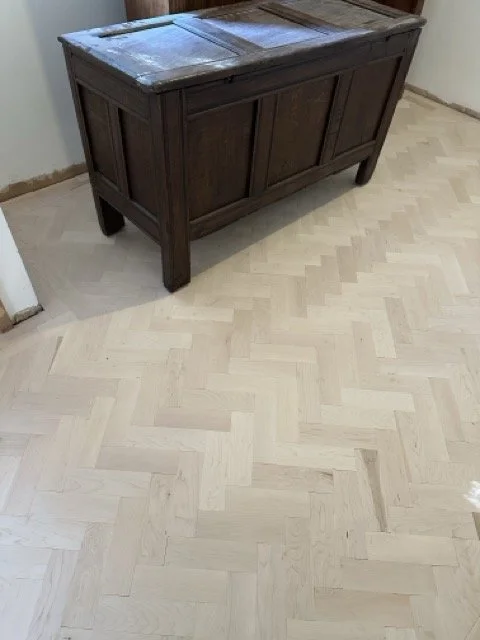
A zig-zag pattern where each rectangular plank is laid at a right angle to the next. It brings movement, texture, and elegance, making it a classic choice for high-impact spaces.Chevron
Often confused with herringbone, chevron uses planks cut at an angle so they form a continuous “V” shape. This creates a sleek, modern, and more symmetrical look compared to herringbone.Parquet
A traditional style made of small blocks arranged into geometric designs like squares, triangles, or diamonds. It’s very decorative and often used in formal or historic settings.Basket Weave
It is made by laying rectangular planks in a crisscross pattern that resembles a woven basket. This style offers a more intricate and distinctive look, adding depth and interest to the floor while still feeling orderly and balanced.