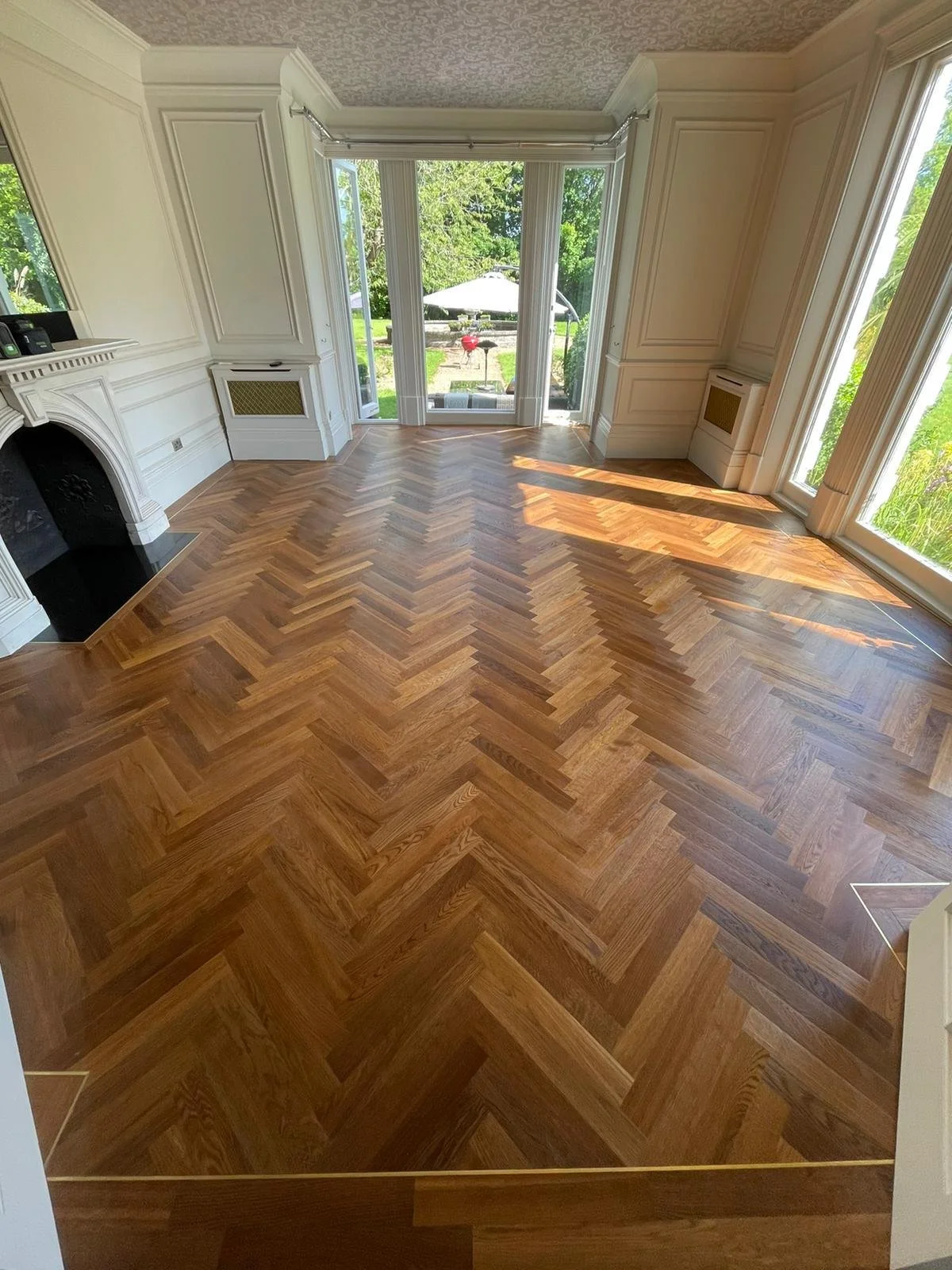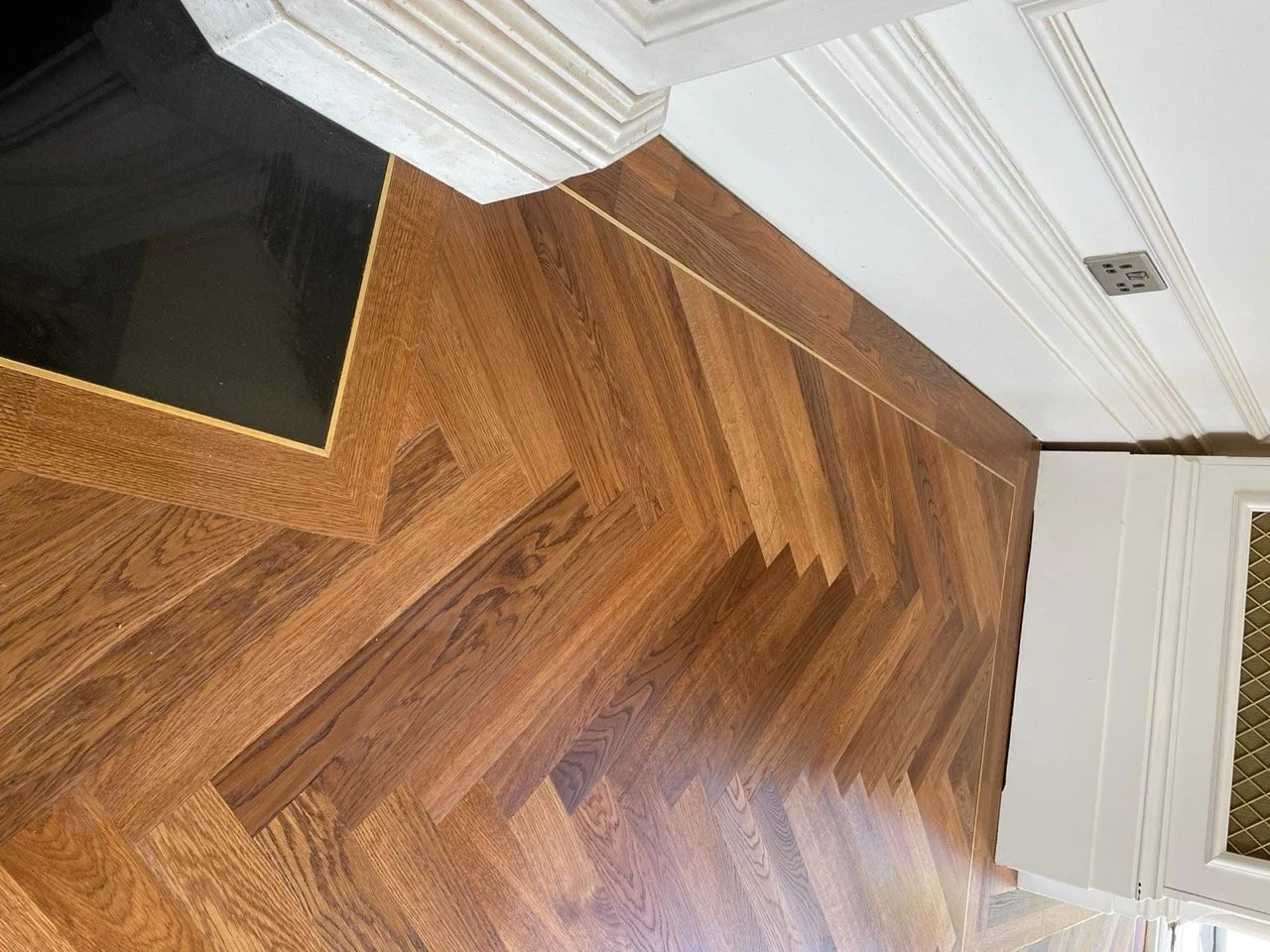
Engineered wood flooring offers the beauty and warmth of natural timber with added stability, making it an excellent choice for modern homes. It delivers the elegance of real wood while providing strength and versatility – ideal for a wide range of rooms and environments.
Engineered Wood Flooring

What Is Engineered Wood Flooring?
Engineered wood flooring is made from multiple layers of timber pressed together, topped with a real hardwood veneer. This structure gives you the authentic look and feel of solid wood while offering superior resistance to movement from humidity and temperature changes.
Because of its multi-layer construction, engineered wood is less prone to expansion and contraction. This makes it suitable for areas where solid wood may be sensitive, such as kitchens, conservatories and rooms with underfloor heating. It is also easy to clean and maintain and, like solid hardwood, it does not trap dust, pollen or allergens – making it a healthier choice for indoor air quality.

Why Could Engineered Wooden Flooring Be Right For Me?
Engineered wood flooring is perfect if you want the natural beauty of wood with added practicality. Its enhanced stability means it performs well in both traditional and modern homes – particularly in spaces where temperature and moisture levels vary. The hardwood top layer can often be sanded and refinished (depending on thickness), allowing you to refresh the floor and extend its lifespan.
The genuine wood veneer brings warmth, rich tones and unique grain patterns to any room, giving you the same aesthetic appeal as solid hardwood. Engineered boards are available in a wide range of finishes, plank widths and patterns, allowing you to achieve anything from a rustic character style to a sleek, contemporary look.
Engineered Wood Flooring FAQ
-
Engineered wood flooring is made from multiple layers of timber bonded together, topped with a real hardwood wear layer. This construction offers the natural beauty of genuine wood while providing enhanced stability, reducing movement caused by changes in temperature or humidity.
The result is a durable, versatile floor suitable for many areas of the home — including spaces where solid wood may be less suitable, such as kitchens or rooms with underfloor heating.
-
Oak – The most popular choice, known for durability, strength and timeless grain patterns.
Walnut – A luxurious, darker wood offering rich, elegant tones.
Hickory – Very hard-wearing, with striking grain variations.
Maple – Light, smooth and modern, perfect for bright, airy spaces.
Smoked / Stained Finishes – Enhance the depth and character of the wood while keeping the natural texture.
Brushed and Oiled – Provides a textured surface and a natural, matte appearance.
Lacquered – Offers a smooth, protective topcoat for added durability.
-
The key difference lies in their construction.
Solid wood is made from a single piece of timber and can be sanded and refinished many times throughout its life.
Engineered wood has a real hardwood top layer supported by layers of high-quality plywood or softwood beneath. This multi-layered structure provides superior stability, making it less prone to expansion and contraction.
Both offer the authentic look and feel of real wood, but engineered flooring is often the more practical choice for environments with fluctuating moisture or heat levels. It is also generally more affordable than solid wood, offering the same natural appearance at a lower overall cost.
-
Yes — many engineered wood floors can be sanded and refinished, depending on the thickness of the hardwood wear layer. Thicker wear layers can be refinished multiple times, allowing you to restore the surface, remove scratches and refresh the finish.
A professional “sand and seal” brings tired floors back to life and helps extend the overall lifespan of your engineered wood.